
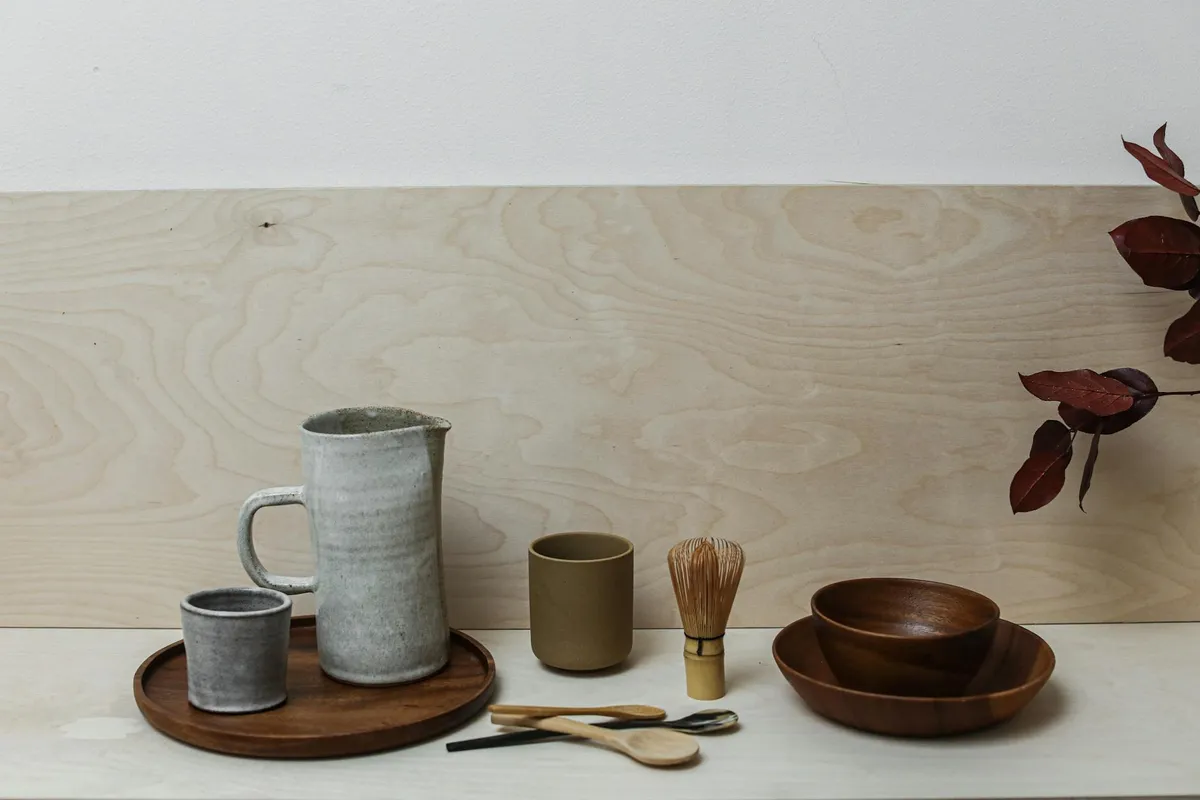
Wabi-sabi has become one of the standard Japanese cultural exports to the West. It appears in design magazines, interior decoration trends, lifestyle content. The term gets used to mean "imperfection," "rustic," "weathered," "embracing flaws." Most of these uses are partial at best and misleading at worst.
The actual concept is more specific, more demanding, and more philosophically complex than the popular Western interpretation suggests. I want to think through what is genuinely there, with appropriate humility about writing from outside the tradition.
What wabi-sabi actually means
The two characters that compose the term carry distinct meanings.
Wabi (侘び) originally referred to the loneliness of living in nature, removed from society. Over time, particularly through the development of the tea ceremony, it came to refer to a kind of beauty found in austerity, restraint, and removal of the unnecessary. It implies acceptance of conditions one cannot change.
Sabi (寂び) originally referred to the loneliness or weathered quality that develops with age and use. It refers to the beauty that emerges through time — the patina on a worn metal object, the soft surface of long-handled wood, the irregular shape of a long-glazed pot.
The combination, wabi-sabi, refers to an aesthetic appreciation of beauty that is simple, weathered by time, marked by the irregularity that natural processes produce, and achieved through restraint rather than addition.
What it does NOT mean
Several common Western interpretations miss what wabi-sabi actually involves:
Not "embrace your imperfections." Wabi-sabi is not a self-help concept about accepting personal flaws. It is an aesthetic principle about specific qualities in objects and spaces.
Not "rustic decor." The "wabi-sabi interior" of Western design magazines often features intentionally distressed objects produced in factories. This is largely the opposite of what the concept refers to.
Not "embrace mess." Wabi-sabi spaces are usually meticulously maintained and ordered. The aesthetic emerges through careful curation, not through neglect.
Not "anti-perfection." Wabi-sabi does not reject quality or skill. It rejects ostentation and unnecessary elaboration. The tea bowl that exemplifies wabi-sabi requires a master craftsperson who has internalized exactly when restraint becomes the right choice.
The Western popularization tends to flatten wabi-sabi into a generic appreciation of imperfection, which loses what makes the concept distinct.
The historical context that shaped the concept
Wabi-sabi developed within specific historical circumstances. The concept took its mature form in the 16th century through the work of tea masters, particularly Sen no Rikyū, who developed the wabi-cha style of tea ceremony.
The tea ceremony of Rikyū's era was developing in deliberate contrast to the elaborate Chinese-influenced tea practices of the elite. Rikyū's tea was conducted in small spaces, with humble utensils, with attention to natural materials and seasonal awareness, and with an emphasis on the relationship between host and guest rather than on display of valuable objects.
The aesthetic principles that emerged from this practice were not abstract design ideas. They were responses to specific cultural conditions and specific spiritual aspirations. Removing them from this context and applying them to contemporary Western interior design substantially changes what the concept does.
What wabi-sabi requires
Authentic wabi-sabi practice requires several things that the popularized version often skips:
Genuine craft skill. The objects that exemplify wabi-sabi are made by craftspeople with deep training. The "imperfection" is the controlled choice of someone who can also produce perfect symmetry; not the result of unskilled work.
Attention to materials. The specific qualities of materials — the way clay responds to firing, the way wood ages, the way metal patinas — matter substantially. Wabi-sabi requires specific materials properly understood.
Time. Many qualities that wabi-sabi appreciates emerge through time. The patina on the tea kettle, the worn edge of the wooden ladle, the soft surface of the long-used bowl. These cannot be artificially produced.
Cultural context. The full appreciation of wabi-sabi depends on engaging with the broader cultural and spiritual context that gave rise to the concept. Removed from this context, it becomes decoration.
The popularized version typically skips most of these requirements. The result is "wabi-sabi inspired" objects and spaces that miss most of what the concept actually involves.
What can be honestly engaged with
For people interested in genuinely engaging with wabi-sabi from outside Japanese culture, several approaches are more honest than buying "wabi-sabi inspired" decor.
Study the actual practices. The tea ceremony, the work of specific tea masters and potters, the history of how the concept developed. The sources are available; the engagement requires effort.
Engage with authentic objects. Quality work by Japanese craftspeople in traditions connected to wabi-sabi. These are usually expensive and require some research to identify. They are also genuinely different from mass-produced "wabi-sabi" objects.
Consider the underlying principles for your own context. Restraint, attention to materials, appreciation of time, careful curation. These principles can inform your own aesthetic decisions without claiming to practice wabi-sabi specifically.
Develop appreciation through sustained attention. Wabi-sabi rewards patient looking. The qualities that the concept identifies are real but require trained perception to appreciate fully.
The broader pattern
The popular Western adoption of wabi-sabi is a particular case of a broader pattern: aesthetic concepts from non-Western traditions get adopted in flattened forms that lose much of what made them distinctive in their original contexts.
Other examples include various flattened versions of mindfulness, hygge, ikigai, lagom, and similar concepts. Each gets pulled from its cultural context, simplified, and marketed as a lifestyle product.
This pattern is not malicious. It reflects real interest in concepts from other traditions. It just produces engagement that often misses what made the concept worth attention in the first place.
The honest engagement
For Western writers and readers genuinely interested in Japanese aesthetic traditions, several practices help.
Read substantively about Japanese culture. Not just the simplified introductions but the substantive scholarship that examines how concepts developed and what they actually involve.
Engage with Japanese artists and craftspeople directly when possible. Visit exhibitions. Buy authentic works. Read interviews with practitioners.
Be appropriately humble about the limits of cross-cultural understanding. Some aspects of any tradition are accessible only through full immersion in the cultural context. Honest engagement acknowledges this limit.
Avoid claiming expertise that exceeds actual study. The depth of Japanese aesthetic traditions is substantial. Casual engagement does not produce deep understanding.
Distinguish between inspiration and authentic practice. Drawing inspiration from a tradition is different from practicing that tradition. Both are legitimate but they should not be conflated.
A closing observation
I find wabi-sabi genuinely interesting. The concept identifies real qualities in objects and spaces that are worth attending to. The aesthetic principles that emerge from the tradition have informed design and craft far beyond their original context.
I also find the Western popular version frustrating. The flattening of the concept into generic "rustic imperfection" loses what makes it distinct from countless other aesthetic traditions that also value irregularity and weathering.
The choice for anyone genuinely interested is between the easier popular version and the more demanding authentic engagement. Both are available. The two produce substantially different experiences.
The deeper engagement is harder. It also produces a relationship to the tradition that the surface engagement cannot.