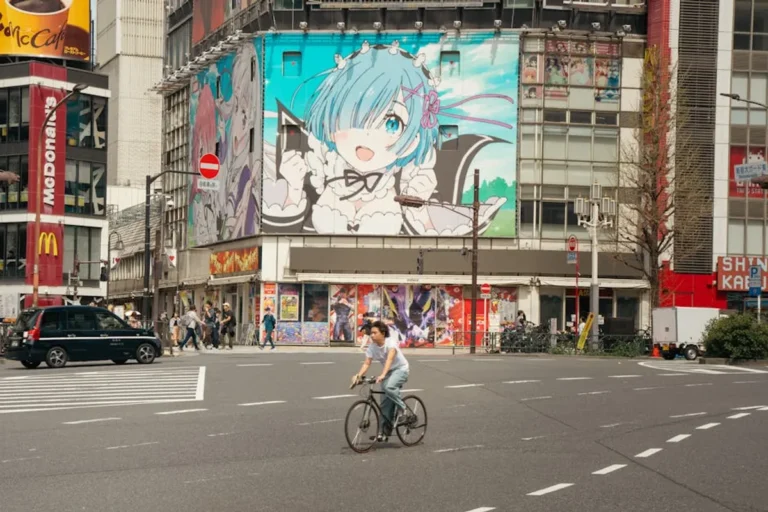

I have spent twelve years engaging substantively with Japanese culture from outside the tradition. I do not speak fluent Japanese. I have visited Japan multiple times but have never lived there. My engagement is mediated through translations, museums, books, films, conversations with Japanese friends and acquaintances, and substantial reading.
This is a particular kind of engagement that has both real substance and real limits. I want to think through what is genuinely accessible to this kind of engagement, what is not, and how to navigate the limits honestly.
What is genuinely accessible from outside
Substantial portions of Japanese culture are accessible to engaged outsiders willing to do the work.
Visual art. Japanese paintings, prints, sculpture, ceramics, and other visual arts are extensively documented and frequently exhibited internationally. With some background reading and time at exhibitions, substantive engagement is possible.
Literature in translation. Most major Japanese literature is available in English translation. The translations vary in quality but the substantive content is accessible. Reading Tanizaki, Kawabata, Mishima, Murakami, and many others gives genuine access to Japanese literary culture.
Film. Japanese cinema is widely subtitled and accessible. The work of Ozu, Kurosawa, Mizoguchi, Naruse, Ichikawa, contemporary filmmakers like Kore-eda and Hamaguchi — all available with subtitles to anyone willing to seek them out.
Architecture. Books, photographs, and visits provide substantial access to Japanese architectural traditions. Contemporary architects (Ando, Kuma, Sejima) work in international contexts and produce documented work.
Craft traditions through their objects. Quality Japanese pottery, lacquerware, textiles, and other craft objects are available for purchase and study. Direct engagement with the objects themselves provides substantive access.
Music. Recordings of traditional and contemporary Japanese music are widely available. Some background reading helps with traditional forms; contemporary music is accessible without specific cultural knowledge.
Food culture. Japanese restaurants outside Japan provide substantial (if imperfect) access to Japanese food traditions. Cookbooks and food writing provide additional context.
None of this is shallow. Sustained engagement with these accessible elements produces real understanding of substantial portions of Japanese culture.
What is genuinely difficult or impossible without immersion
Other elements of Japanese culture require deeper immersion or are essentially inaccessible to outsiders.
Linguistic nuance. Translations capture content but lose substantial nuance. The way Japanese works grammatically, the politeness levels, the implicit context, the wordplay — these largely cannot be transmitted through translation.
Daily cultural patterns. The texture of daily life in Japan — the social interactions, the unstated norms, the way time is structured, the patterns of personal relationships — requires actual living in Japan to absorb.
Religious practice. The Buddhist and Shinto practices that pervade Japanese culture operate at registers that outsider observation cannot fully access. The lived experience of these practices requires participation.
Specific subcultures. Japanese youth subcultures, professional subcultures, regional subcultures all have substantial internal complexity that surface engagement misses.
Family and personal dynamics. The patterns of Japanese family life, personal relationships, and individual identity formation operate in ways that even Japanese fiction and film only partially reveal to outside readers.
Acknowledging these limits is part of honest engagement. The outsider can know substantial things about Japanese culture without having to claim full understanding.
The romanticization problem
One of the persistent risks of engaging with Japanese culture from outside is romanticization. The "wisdom of the East" framing, the search for spiritual depth that Western culture supposedly lacks, the projection of various Western desires onto Japanese practices.
This romanticization has real effects. It produces popular versions of Japanese cultural concepts (like the wabi-sabi flattening I have written about elsewhere). It distorts understanding of contemporary Japanese culture. It positions Japan as a kind of spiritual resource rather than a complete culture with its own complexities.
Honest engagement requires resisting romanticization. The Japanese culture worth engaging with is not the romanticized version but the actual culture in its full complexity, including its difficulties and contradictions.
The appropriation question
Cultural appropriation discourse has become substantial in recent decades. The application to Japanese culture is contested.
Some elements of cultural exchange are clearly fine. Reading translated literature, watching subtitled films, eating Japanese food, buying authentic crafts from Japanese practitioners. These activities support and engage with Japanese culture.
Other elements are more contested. Adopting Japanese practices outside their original contexts. Using Japanese aesthetic concepts in commercial design. Practicing martial arts or tea ceremony as outsiders. The judgments here vary among Japanese commentators themselves.
Some general principles that help:
- Engage with Japanese culture in ways that support Japanese practitioners economically
- Acknowledge sources rather than presenting borrowed practices as one's own innovation
- Be honest about the limits of one's expertise
- Avoid commercialization of practices that are sacred or ritualistically significant
- Listen to Japanese voices about their own culture rather than speaking over them
None of these resolves all questions. They provide reasonable orientation.
The methodology that works for sustained engagement
For people interested in substantive engagement with Japanese culture, several practices help.
Read widely and substantively. Both primary works (literature, art books, criticism) and secondary scholarship. The depth of available material rewards sustained reading.
Visit Japan when possible. Direct experience adds dimensions that mediated engagement cannot provide. Even short visits substantially enhance understanding.
Develop relationships with Japanese friends and colleagues. Conversations with people who actually live within the culture provide context that no amount of reading replicates.
Learn some Japanese. Even modest language ability changes the engagement substantially. Full fluency is not required for the difference to be substantial.
Be patient. Real understanding of any complex culture takes years. The relationship deepens over time in ways that cannot be rushed.
Stay humble. Sustained engagement reveals how much there is to learn. The honest stance is acknowledgment of how much remains beyond access.
What sustained engagement produces
For people who engage substantively with Japanese culture over years, the benefits are several:
Genuine appreciation of substantial cultural production. Japan has produced extraordinary art, literature, film, and craft. Engaging with this work adds genuine richness to one's cultural life.
Perspective on one's own culture. Engaging with another cultural framework reveals assumptions in one's own that were previously invisible.
Models for thinking about cultural production. The Japanese approaches to craft, tradition, aesthetic development offer models that are useful even outside their original context.
Friendship and relationship across cultures. Substantive engagement creates conditions for genuine cross-cultural friendships that surface engagement does not.
Humility about cultural understanding generally. The depth of any complex culture, fully engaged with, produces appropriate humility about how much can really be known across cultural boundaries.
What this site tries to be
This publication is one outsider's attempt at sustained engagement with Japanese aesthetic and cultural traditions. The engagement is real but limited. The writing tries to be honest about both the engagement and the limits.
I write about what I have studied substantively. I try to acknowledge the boundaries of my understanding. I try to direct readers toward Japanese sources whenever possible. I try to support Japanese practitioners economically through my own purchases and through directing readers to authentic work.
None of this resolves the difficulties of cross-cultural engagement. It tries to navigate them honestly.
A closing observation
I find Japanese culture genuinely interesting. The aesthetic traditions, the craft practices, the literature, the film, the philosophical concepts. There is enough substantial work to occupy decades of serious engagement.
I also remain conscious that my engagement is from outside. There are dimensions of Japanese culture that I will never fully access regardless of how much I read or how often I visit. The honest stance is acknowledgment of these limits alongside continued effort to understand what can be understood.
The engagement continues, year after year. The understanding deepens, slowly, through accumulated study and experience. The limits remain. The work continues anyway, because the cultural production is worth engaging with even from imperfect distance.