
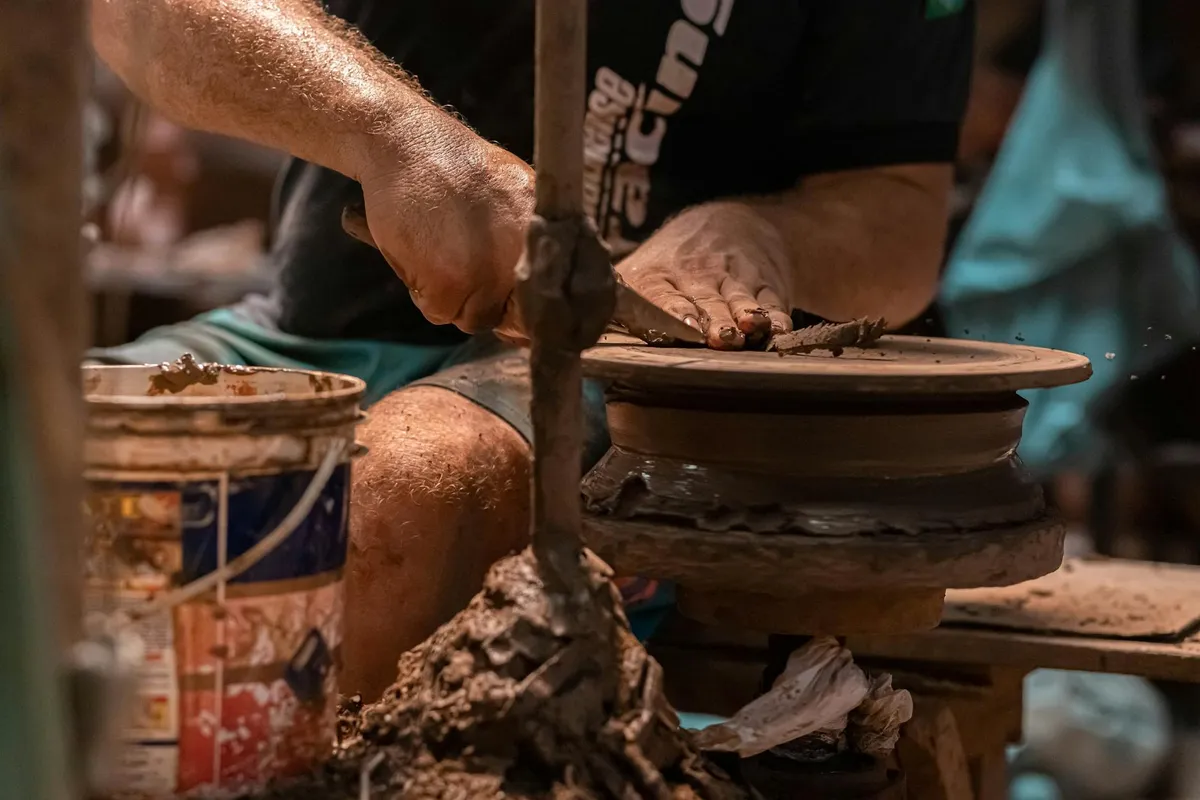
A Japanese woodworker I know works in his small shop seven days a week, typically eight to ten hours daily. He has done this for thirty-seven years. His shop is precisely organized; his tools are meticulously maintained; his workflow has been refined to the point of seeming inevitable. The objects he produces — primarily traditional joinery and small furniture — are quietly excellent in ways that are hard to describe but immediately apparent.
I want to think through what produces this kind of mastery, and why the principles that govern it are recognizable across many domains of serious practice.
The Japanese craft model
Traditional Japanese craft training follows recognizable patterns:
Long apprenticeship under a single master. Often 7-10 years before the apprentice is considered competent enough to work independently. Many years more before they are considered fully trained.
Sequential mastery of specific skills. Apprentices spend extended periods on single techniques before moving to the next. The first year might be entirely focused on tool maintenance. The second on basic preparation tasks. Only after substantial preparation do apprentices begin actual production work.
Embodied learning. Knowledge transmitted through observation and gradual participation rather than verbal instruction. The apprentice learns by watching the master and gradually taking on parts of the work.
Repetition as foundation. Specific techniques practiced thousands of times. Mastery comes from the repetition itself, not from theoretical understanding alone.
Daily practice without exception. The work continues daily. Days off are rare. The discipline is the practice continuing.
This model produces specific kinds of expertise that other training approaches typically do not match.
What daily practice actually produces
Several specific things happen during sustained daily practice that intermittent practice does not produce.
Embodied capability. The skill becomes available without conscious effort. The hands know what to do. The eye sees what needs to be seen. The judgment operates without explicit deliberation.
Accumulated material knowledge. Years of working with specific materials produces understanding of their properties that cannot be transmitted through any other means. The wood's characteristics, the clay's response, the metal's behavior under specific conditions.
Integration of technique and judgment. Skill develops alongside the judgment to know when to apply it. These cannot be separated; they develop together through extended practice.
Refinement through cycles of attempt and correction. Each day's practice produces small variations that succeed or fail. The accumulated experience refines the practitioner's sense of what works.
Sustained relationship with the work. The practitioner develops not just skill but a sustained engagement with the practice itself. The work becomes part of their identity in ways that less sustained engagement cannot produce.
Why this differs from intermittent intensive effort
The mathematics of compound effort favor daily practice substantially over intermittent intensive effort.
A craftsperson who works one hour daily produces 365 hours of work per year. A craftsperson who works eight hours per day on weekends only produces 832 hours per year. The weekend craftsperson produces more raw hours.
But the daily craftsperson produces those hours in a way that supports skill compounding. Each session reinforces the previous session's development. The skill curve is smoother and steeper.
The weekend craftsperson's hours include substantial restart effort each weekend. Skills developed during the previous weekend have partially regressed during the workweek. Each session begins with recovery before development can resume. The effective skill development per hour is lower.
Across years, the daily practitioner develops capability faster than the intermittent practitioner despite working fewer total hours. The pattern is robust enough that most serious craft practitioners across cultures have converged on daily practice.
The transferability across domains
The principles that produce craft mastery in Japanese tradition transfer to many other domains of serious practice.
Music: Serious musicians practice daily across decades. The cumulative capability that produces concert-level performance requires this kind of sustained practice.
Athletic performance: Elite athletes train daily across years. The adaptations that produce competitive capability require sustained daily stress on the relevant systems.
Writing: Most accomplished writers write daily or near-daily. The skill development and the body of work both depend on sustained practice.
Scientific research: Scientists who produce major contributions typically work daily on their research. The cumulative engagement with problems produces breakthroughs that intermittent attention does not.
Programming: Highly capable programmers typically code daily. The skill development depends on sustained engagement with problems.
The pattern is broad enough that it suggests something fundamental about how complex skills develop. Daily practice over years produces capability that other patterns of effort cannot match.
The discipline question
The case for daily practice is straightforward. The discipline to actually do daily practice is the difficult part.
Most amateur practitioners cannot sustain daily practice for long. They start enthusiastically, work consistently for a few weeks or months, encounter some life disruption, lose the thread, restart with reduced enthusiasm, eventually drift away from the practice entirely.
The serious practitioners who do sustain daily practice across decades are mostly people whose lives have been organized around the work in ways that support the discipline. Professional craftspeople whose income depends on production. Independent practitioners with personalities suited to solitary daily work. People who have developed strong support systems that enable the sustained discipline.
For people whose lives are not currently organized around the work, sustaining daily practice requires either reorganizing the life or accepting practice less frequent than daily.
What the Japanese tradition adds
Beyond the basic principles of daily practice, the Japanese craft tradition adds several specific elements:
Cultural framing of the practice as worthy in itself. The work is treated as inherently valuable regardless of immediate output. This cultural framing supports sustained discipline differently than purely outcome-focused framings.
Master-apprentice relationships. The structure of training within established lineages provides ongoing context and accountability for practice.
Connection to broader tradition. Practitioners are not just developing personal skill but participating in continuation of multi-generational tradition. The motivation differs from purely individual achievement.
Emphasis on character development alongside technical skill. Traditional craft training is treated as personal development as well as technical training. The discipline of practice is understood to shape the person, not just the skill.
These cultural and structural elements support the sustained practice that produces mastery.
What can be transferred from Japanese tradition to other contexts
For practitioners in any domain wanting to apply principles from the Japanese craft tradition:
Commit to daily practice. The most consequential element. Frequency matters more than session length.
Find or develop ongoing structure. Whether master-apprentice relationships, peer accountability, or institutional context, sustained discipline benefits from structure.
Treat the practice as worthy in itself. Outcome-only framings tend to break down when outcomes are slow or uncertain. Practice as inherently valuable supports sustained engagement.
Accept long timelines. Mastery requires years. Plans that assume faster development typically fail.
Integrate practice into life rather than fitting it into spare time. Sustainable daily practice requires that the practice has reliable place in the daily structure.
None of these requires being Japanese or practicing within Japanese cultural framework. They are general principles that the Japanese tradition has developed and refined over centuries.
What this teaches about contemporary work
Contemporary work culture often operates on opposite principles. Sprint-and-recover cycles. Intensive but intermittent effort. Project-based engagement that ends when projects end. Switching between activities frequently.
These patterns can produce results in domains where their characteristics fit. They are poor fits for the development of deep skill and substantial body of work over years.
The contemporary disconnect between work patterns and what produces mastery is one reason why genuine mastery is increasingly rare in many domains. The conditions for sustained development have eroded.
This is not necessarily an argument for full return to traditional craft training models. It is an observation that something is being lost as those models become rare.
A closing observation
The Japanese woodworker I described at the start of this piece represents a particular kind of human achievement that is increasingly rare. Daily practice for thirty-seven years. Continuous refinement of skill and judgment. Body of work that demonstrates accumulated capability.
This kind of sustained practice is achievable in many domains. The discipline required is substantial. The reward is capability that other patterns of effort cannot produce.
For anyone serious about developing deep skill in any domain, the principles that the Japanese craft tradition has refined are worth attention. The specific cultural context cannot be replicated. The underlying principles can be applied.
The work continues, daily, year after year. The mastery emerges, gradually, through the discipline of returning to the practice each day. The principles are old. The application is open to anyone willing to commit to it.